Home > Resources Center > News
The global power tools market is undergoing a fundamental transformation driven by advances in lithium-ion battery technology and brushless motor design. What was once the exclusive domain of corded equipment for serious professional work is now increasingly being addressed by cordless alternatives that match or exceed corded performance in most categories. This shift, which began in consumer markets a decade ago, has now firmly extended into industrial and heavy-duty professional segments.
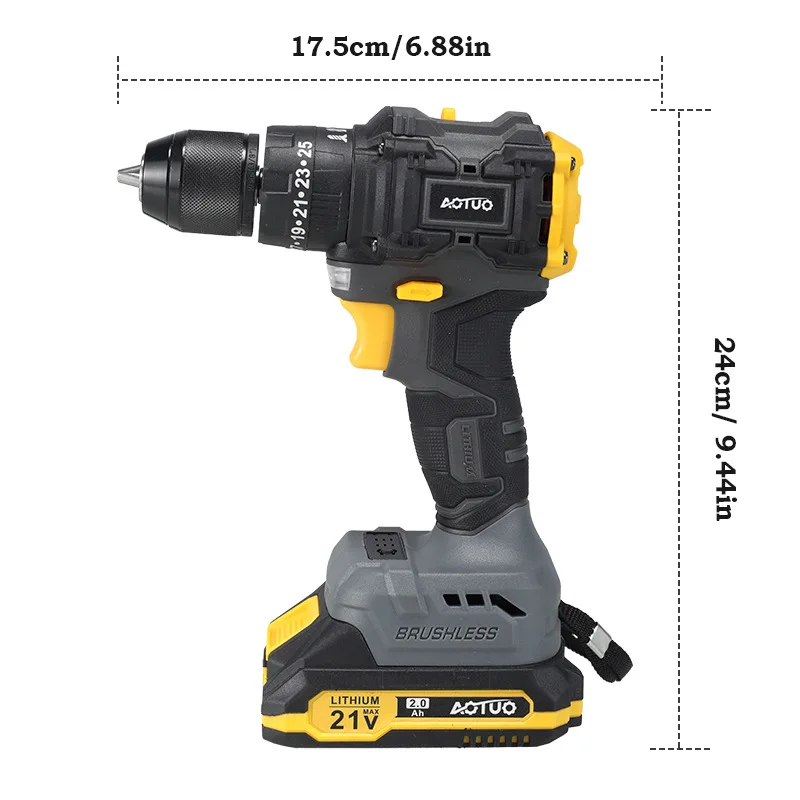
The driving force behind this transition is the dramatic improvement in lithium-ion energy density. Modern 21V and 36V battery packs deliver power output that would have been unthinkable in cordless tools just five years ago. Combined with brushless motor designs that improve electrical efficiency by 25 to 30 percent compared to traditional brushed motors, today's cordless tools can deliver 700Nm of torque, drill through reinforced concrete, and operate continuously through full workdays on a single battery charge. The total cost of ownership has also become favorable, with battery packs lasting 800 to 1,200 charge cycles before noticeable capacity degradation occurs.
For construction contractors, the productivity benefits of cordless tools extend well beyond the obvious convenience of mobility. The elimination of trip hazards from extension cords, the ability to work in locations without immediate electrical access, and reduced setup and teardown time at job sites translate into measurable labor cost savings. Manufacturing environments benefit similarly, with cordless tools enabling more flexible workstation arrangements and reducing the maintenance burden associated with retractable cord systems and pneumatic line installations.
From a manufacturer's perspective, the transition presents both opportunities and challenges. Battery technology, charging system design, and motor control electronics now represent a larger portion of total product cost and complexity. Suppliers who have invested in vertical integration of these technologies, as AOTUO has done with our in-house brushless motor development and battery management system design, are better positioned to control costs and quality. Suppliers who continue to rely on generic motor and battery sourcing find themselves squeezed between component costs and competitive pricing pressures.
Looking forward, we anticipate continued performance gains as solid-state battery technology matures and as motor control algorithms become more sophisticated. Tools that can dynamically adjust power output based on workload, predict battery state of health for preventive replacement, and integrate with workflow management software are already entering the professional market. For distributors and brand owners, partnering with manufacturers who actively invest in these emerging capabilities will be increasingly important to maintaining product competitiveness over the coming decade.
Copyright © Jinhua Aotuo Hardware Tools Co., Ltd. All Rights Reserved — Privacy Policy

 EN
 Hot News